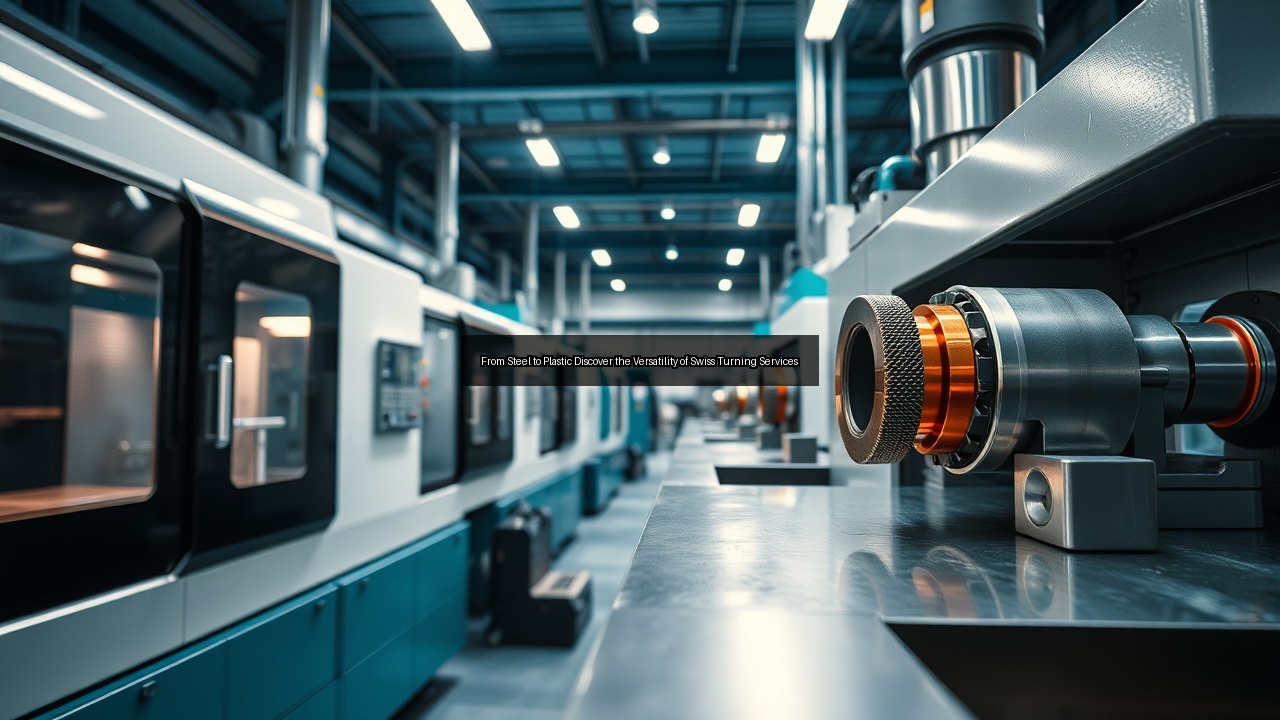
From Steel to Plastic Discover the Versatility of Swiss Turning Services
Understanding Swiss Turning Services
What is Swiss Turning?
Swiss turning, or Swiss machining, refers to a specialized form of CNC turning that excels in producing high-precision components. Originating in Switzerland, this technique utilizes a unique lathe design that allows the workpiece to move while the cutting tools remain stationary. This movement enables the creation of intricate parts with exceptional accuracy. Swiss turning services often cater to industries requiring small, complex components with tight tolerances. The machines employed feature multiple axes, allowing for simultaneous operations such as turning, drilling, and milling. This capability significantly enhances efficiency, making Swiss turning a preferred choice in precision manufacturing.
Key Advantages of Swiss Turning
Swiss turning offers several advantages over other machining methods. First and foremost, the ability to maintain tight tolerances elevates product quality. Precision is crucial, especially in sectors like aerospace and medical devices, where even slight deviations can lead to significant issues. The design of Swiss lathes allows for high-speed machining, reducing cycle times and increasing productivity. Furthermore, the minimal handling of parts during production minimizes the chance of damage, ensuring consistency. Swiss turning is also versatile, accommodating various materials, including metals and plastics like acetal and PTFE. This adaptability makes Swiss turning services invaluable across diverse applications.
Comparison with Traditional CNC Turning
When comparing Swiss turning with traditional CNC turning, several key differences emerge. Traditional CNC lathes typically operate with fixed workpieces and rotating tools, making them ideal for larger or less complex components. In contrast, Swiss turning allows for a more dynamic approach, where the workpiece is held firmly while the tools move. This design results in superior precision and the ability to produce smaller parts efficiently. Additionally, Swiss lathes often feature a gang tool setup, which permits multiple tools to work simultaneously on different operations. The combination of these features leads to faster production times and enhanced quality assurance, making Swiss turning services a superior choice for intricate components.
Materials Used in Swiss Turning
Metals: Steel, Copper, and Their Applications
Swiss turning services utilize a variety of metals, with steel and copper being among the most common. Steel's strength and durability make it ideal for components that require high tensile strength, such as automotive parts and industrial machinery. The versatility of steel allows it to be machined into complex shapes while maintaining excellent dimensional accuracy. Copper, known for its excellent thermal and electrical conductivity, is often used in electronics and electrical components. Swiss lathes can produce intricate designs in both materials, ensuring that manufacturers achieve high-quality parts that meet specific industry standards. As industries evolve, the demand for precision parts made from these metals continues to rise, further solidifying the importance of Swiss turning services.
Plastics: Acetal and PTFE in Precision Parts
Plastic materials like acetal and PTFE (Polytetrafluoroethylene) play a vital role in Swiss turning services. Acetal is prized for its strength, rigidity, and resistance to wear, making it suitable for applications such as gears, bearings, and bushings. Its excellent machinability allows for the production of intricate designs with tight tolerances, which is essential for high-performance components. PTFE, commonly recognized for its non-stick properties, is ideal for applications requiring low friction and high chemical resistance. Swiss turning can effectively create precision parts from these materials, ensuring quality assurance and performance in diverse applications, from medical devices to aerospace components.
The Role of Material Selection in Quality Assurance
Material selection significantly influences the overall quality of components produced through Swiss turning services. Choosing the right material ensures that the final product meets performance requirements and industry standards. Factors such as strength, weight, corrosion resistance, and thermal properties must be considered when selecting materials for machining. Swiss turning services excel in producing high-quality parts by utilizing advanced materials tailored to specific applications. Companies that prioritize quality assurance recognize the importance of using the right materials, as this not only enhances durability but also contributes to the precision of the finished product. Effective material selection, combined with expert machining techniques, leads to exceptional results in precision manufacturing.
Precision and Quality in Swiss Turning
Achieving Tight Tolerances with Swiss Lathes
Swiss lathes excel swiss machining services in achieving tight tolerances, a fundamental requirement in precision manufacturing. The unique design of these machines allows for superior control over the machining process, enabling manufacturers to produce parts with tolerances as tight as a few microns. This level of precision is essential in industries like aerospace, where safety and performance are paramount. Swiss turning services employ advanced technologies and skilled operators to ensure that each component meets stringent specifications. The combination of state-of-the-art equipment and expert craftsmanship guarantees that manufacturers can depend on Swiss turning for high-quality, precise parts that consistently meet industry standards.
Surface Finishing Techniques for Enhanced Quality
Surface finishing techniques play a crucial role in enhancing the quality of parts produced through Swiss turning. Achieving a smooth surface finish not only improves the aesthetic appeal of components but also contributes to their functionality. Various techniques, such as polishing, anodizing, and coating, can be employed to enhance surface properties. For instance, anodizing can improve corrosion resistance, while polishing can reduce friction in moving parts. Swiss turning services often incorporate these finishing processes to ensure that the final product meets the desired specifications. By focusing on surface quality, manufacturers can enhance the performance and longevity of their components, making Swiss turning an invaluable aspect of precision machining.
ISO Standards in Swiss Turning Services
Compliance with ISO standards is vital in the realm of Swiss turning services. These standards ensure that manufacturing processes meet internationally recognized quality benchmarks. Companies that adhere to ISO certifications demonstrate a commitment to quality assurance and continuous improvement. ISO 9001, for instance, focuses on effective quality management systems, while ISO 13485 is specific to medical devices. By aligning their operations with these standards, Swiss turning service providers can guarantee that their processes yield high-quality, reliable products. This adherence not only fosters trust with clients but also enhances the reputation of the company within the industry. Clients can be confident that their precision parts are produced with the highest standards of quality in mind.
Applications of Swiss Turning Services
Industries Benefiting from Swiss Turning
Swiss turning services serve a multitude of industries, each benefiting from the precision and efficiency of this machining technique. The medical device industry relies on Swiss turning to produce components such as surgical instruments and implants, where precision is non-negotiable. Aerospace manufacturers utilize Swiss lathes for creating parts that must withstand extreme conditions while maintaining strict tolerances. The automotive sector also benefits from this technology, as Swiss turning can produce high-performance engine components and intricate fasteners. Additionally, electronics manufacturers utilize Swiss turning for the production of connectors, housings, and other precision components. The versatility of Swiss turning services ensures that industries can achieve their manufacturing goals while maintaining high standards of quality.
Innovative Designs and Prototypes with CNC Machining
CNC machining, including Swiss turning services, plays a pivotal role in developing innovative designs and prototypes. The ability to precisely manufacture components allows engineers and designers to bring their visions to life. Rapid prototyping, enabled by CNC technology, allows for quick iterations and adjustments, facilitating the design process. Swiss turning services can create complex geometries that traditional machining methods struggle to achieve, making it an ideal choice for prototype development. This capability not only accelerates the design phase but also enhances the overall quality of the final product. Companies like Hogge Precision Parts and McCormick Industries leverage Swiss turning for their prototypes, ensuring that their designs are both functional and manufacturable.
Case Studies: Hogge Precision Parts and McCormick Industries
Hogge Precision Parts and McCormick Industries exemplify the successful application of Swiss turning services in their manufacturing processes. Hogge Precision Parts specializes in creating high-tolerance components for the aerospace sector. By utilizing Swiss lathes, they achieve exceptional accuracy and consistency, which are critical in aviation applications. McCormick Industries, on the other hand, focuses on producing intricate components for the medical device industry. Their use of Swiss turning allows them to manufacture parts that meet stringent regulatory requirements while ensuring quality assurance. Both companies demonstrate how Swiss turning services can lead to enhanced performance and reliability in the production of precision parts, showcasing the versatility and capability of this machining technique.